Creative Ceiling Designs and Lighting Ideas for a Stylish Modern Home Interior
How Ceilings and Lighting Shape a Stylish Modern Interior
The ceiling is the most overlooked surface in a modern home, yet it shapes how every room feels. A flat white ceiling disappears; a designed ceiling — a tray, a coffer, a timber beam, a wash of cove light — gives a room architecture, warmth, and a sense of intention. Lighting works with it: the right fixture in the right place turns a plain room into a stylish one, while the wrong light can make even beautiful furniture look flat and tired.
Modern ceiling design is about balance. The ceiling should add interest without lowering the room or crowding it, and the lighting should be layered so one room can shift from bright daytime work to soft evening relaxation. This guide covers the ceiling designs and lighting ideas that work best in modern homes, room by room, with honest notes on cost, height, and when to call in a professional.
Tray, Coffered, and Vaulted Ceilings That Add Architecture Overhead
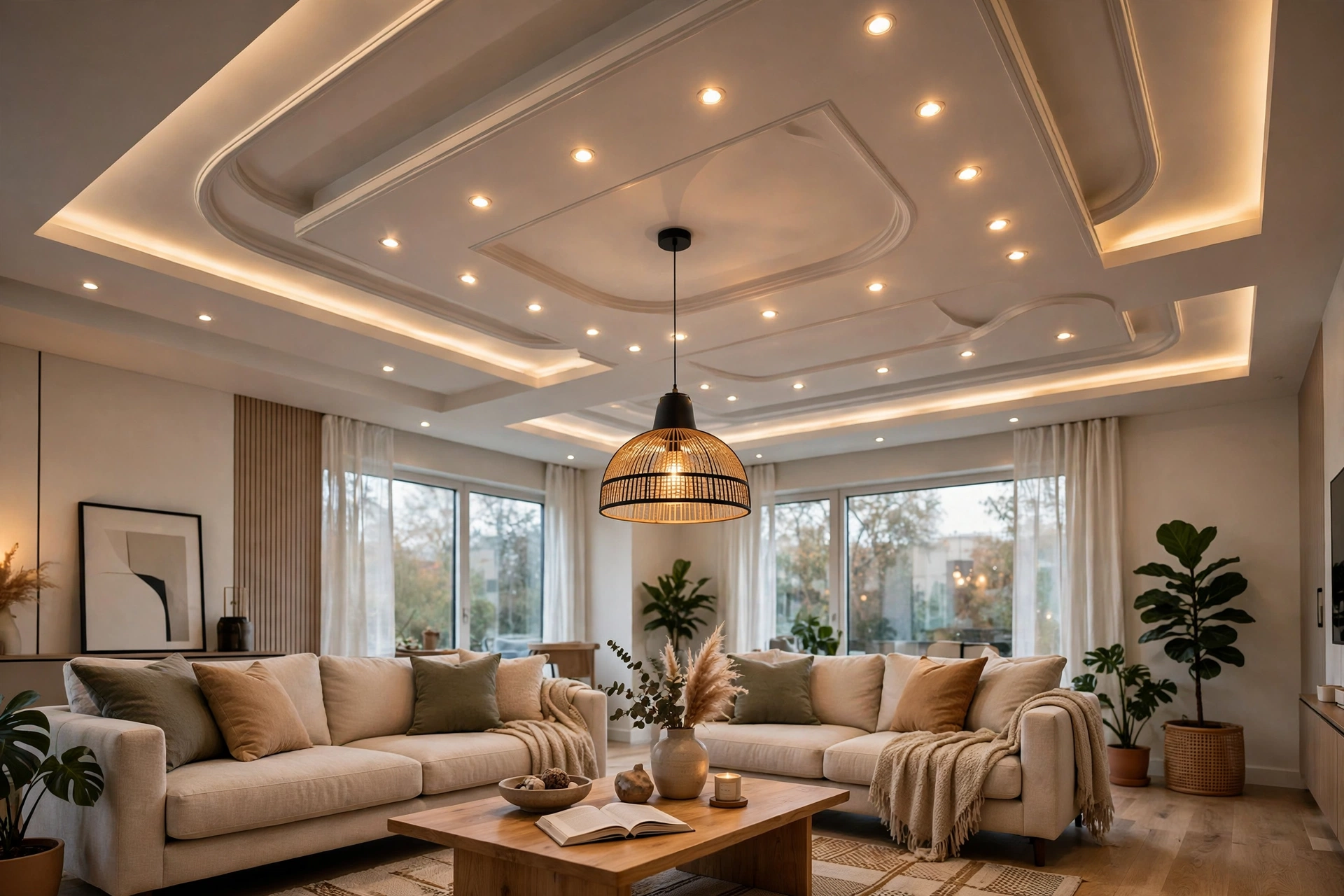
A tray ceiling — a recessed central panel with a stepped border — adds depth and elegance without changing the structure of the room, and it works beautifully in living rooms and bedrooms where a little drama is welcome. The recess can hold cove lighting, a contrasting paint colour, or a simple plaster detail, and the effect is a ceiling that feels designed rather than merely finished. It suits rooms with at least standard ceiling height, because the steps need room to read.
False Ceilings and POP Designs for Clean Modern Lines
False ceilings — a lowered panel below the structural ceiling — are a designer favourite in modern homes because they hide wiring, ducting, and uneven surfaces while creating a clean, finished plane. Plaster of Paris, known as POP, is the most common material: it can be shaped into concentric circles, layered borders, gentle curves, or a simple floating panel, and it takes paint beautifully. A POP ceiling with integrated LED strips or spotlights can turn an ordinary living room ceiling into a masterpiece.
Wood, Beams, and Natural Texture Overhead
Timber overhead brings warmth that paint alone cannot, and it suits modern interiors far better than many homeowners expect. Exposed beams paired with hanging lights create an inviting, rustic-modern atmosphere in a living room, while slim timber slats in a warm oak or walnut tone add rhythm and texture above a dining table or in a hallway. The key is restraint: timber on the ceiling is a strong feature, so keep walls and floors calm and let the wood be the single bold move in the room.
Colour and Pattern on the Fifth Wall
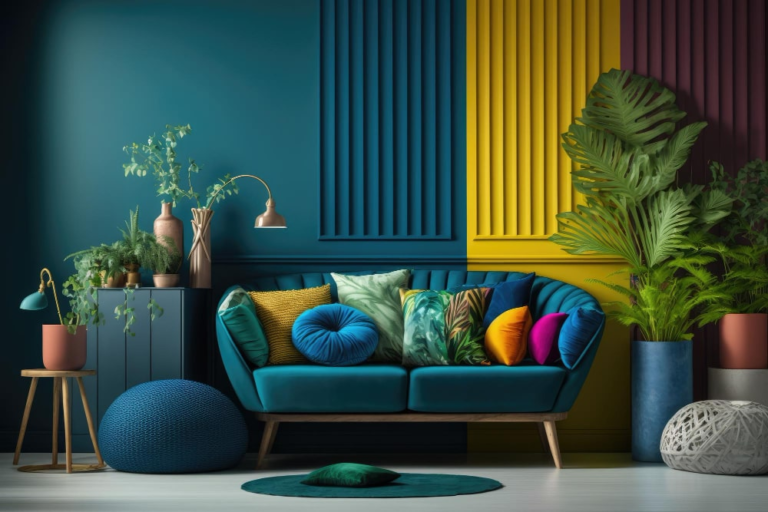
Designers call the ceiling the fifth wall, and treating it as one opens up ideas that plain white never offers. A soft tint overhead — a pale sage, a warm greige, a dusty blue — adds unexpected depth, while a deep colour such as navy or charcoal can make a bedroom feel cocoon-like and intimate, especially with warm lighting and simple furniture. The reverse accent ceiling, a high-gloss lacquer in a deep tone, reflects light downward and can create an illusion of height rather than enclosure.
Chandeliers and Pendants as Ceiling Centrepieces
A chandelier is the crown jewel of ceiling lighting, and modern designs range from crystal clusters to minimalist geometric frames in matte black or brushed brass. Hang one over a dining table, in an entryway, or above a living room seating group, and it becomes the visual focal point that the whole room is arranged around. Size matters: a chandelier that is too small looks lost, while one that is too large crowds the room — as a rough guide, its diameter should suit the table or seating area beneath it, not the whole room.
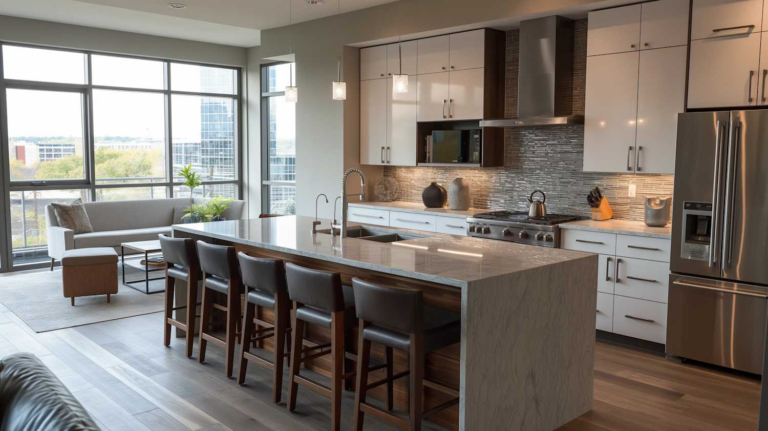
Pendant lights bring personality and focus in a more flexible way, hanging singly over a kitchen island or in clusters of two or three over a dining table or hallway. Glass pendants reflect light around the room and suit smaller or darker spaces, because they seem to hang in mid-air without blocking the eye. Hang pendants low enough to light the surface below — roughly 75 to 90 centimetres above a dining table or kitchen worktop is a common guide — and use dimmers so the same fixture can shift from task light to evening glow.
Recessed, Cove, and Track Lighting for a Modern Glow
Recessed lights, also known as downlights, sit flush with the ceiling and give a clean, clutter-free look with even illumination across the room. They suit modern interiors because they disappear, letting the architecture and furniture speak, and adjustable gimbal versions let you direct light exactly where it is needed — onto art, a reading chair, or a kitchen worktop. Space them evenly and avoid placing them directly over seating, where they can create harsh shadows on faces.
Cove lighting is installed in a recess or hidden behind an architectural element, creating an indirect, subtle glow that highlights the ceiling’s contours without any visible fixture. It is ideal for tray and false ceilings, where it washes the recess with soft light and adds depth after dark. Track lighting offers flexibility where the layout may change: individual heads slide along a rail and can be aimed at art, shelves, or work areas. Combine these three — recessed for general light, cove for atmosphere, track for accent — and a room rarely needs a single central fixture at all.
Smart Ceiling Lighting: Dimmers, Colour Temperature, and Control
Smart ceiling lighting has moved from novelty to genuinely useful, because it removes friction from something you do every day. Smart bulbs and switches let you control brightness, colour temperature, and even colour from a phone or by voice, and scenes can be programmed for different activities: a bright, cool scene for working, a warm dim scene for a film, a gentle wake-up glow in the bedroom. Some systems sync with music or change gradually through the evening, which suits circadian-friendly lighting at home.
Matching Ceiling Designs to Each Room in a Modern Home
Not every ceiling design suits every room, and matching the design to the room’s job is what makes a modern interior feel considered. Living rooms reward a statement: a tray ceiling with cove light, a chandelier, or timber beams. Bedrooms suit calm ceilings — a soft tint, a simple floating panel, and warm dimmable light that helps the room feel restful. Kitchens need bright, even, cleanable light: recessed downlights, under-cabinet strips, and pendants over an island, with moisture-resistant finishes where steam rises.
Bathrooms need the same practical approach, with sealed fittings and bright light at the mirror. Hallways and entries benefit from a pendant or a flush mount that draws the eye upward and makes a narrow space feel taller. The table below summarises the pairing that works most often, but the room’s height, natural light, and existing architecture should always have the final say — a design that fights the room will look wrong however fashionable it is.
Ceiling Design Errors That Make Modern Rooms Feel Heavy
The most common ceiling mistake is adding too much to a low room. A heavy coffer, dark beams, or a deep false ceiling in a room with limited height makes the space feel smaller and heavier, and no amount of clever lighting fully recovers it. In low rooms, keep the ceiling light, the design shallow, and the fixtures flush or semi-flush, and let the walls and furniture carry the drama instead.
Other errors are easy to avoid: a chandelier hung too high, where it lights the ceiling instead of the table; recessed lights spaced unevenly, which creates pools of light and dark patches; and a ceiling design that clashes with the room below — an ornate plaster ceiling over ultra-minimal furniture, or industrial pipe fixtures in a soft, traditional bedroom. A ceiling should complete the room, not compete with it, and the simplest test is to look up and ask whether the ceiling helps the room or distracts from it.
Ceiling Work That Needs an Electrician or a Structural Check
Ceiling design is decorative until it touches wiring, structure, or height — then it needs a professional. Any new lighting circuit, moved fixture, or work inside the electrical panel must be done by a licensed electrician, and in many areas it must be inspected as well. Never drill into a ceiling without checking what runs above it: joists, wiring, pipes, and ducting are all hidden there, and a careless fixing can damage a circuit or a water line.
Structural changes — removing a ceiling to expose a vault, cutting joists, or hanging a very heavy chandelier — need a structural check before work begins, because ceilings carry loads and hide services. The same applies to older homes, where plaster may contain hazards and lath-and-plaster ceilings can be fragile. A professional can also confirm that a false ceiling leaves enough headroom and access for future maintenance, which is the difference between a stylish ceiling and an expensive regret.
Final Thoughts: Creative Ceilings and Lighting for a Stylish Modern Home
A stylish modern interior is finished overhead: a ceiling with a little architecture, lighting in layers, and fixtures chosen for the room rather than the catalogue. Start with the room you use most, choose one ceiling idea and one lighting idea that suit its height and its job, and keep everything else calm enough to let them shine. When the ceiling and the light work together, the whole room feels taller, warmer, and more deliberately designed — and that is a transformation you notice every time you walk in.
Ceiling and lighting pairings that work most often — adapt them to the room’s height and natural light.
Creative Ceiling Design and Lighting FAQs
What is the best ceiling design for a modern home?
It depends on the room’s height and purpose. Tray ceilings with cove lighting suit living rooms, simple floating POP panels suit bedrooms, and recessed lighting with pendants suits kitchens. In low rooms, keep the design shallow and the ceiling lighter than the walls so the space feels taller.
How do I choose ceiling lighting for a low ceiling?
Use flush or semi-flush mounts, recessed downlights, and cove lighting that washes the ceiling with light. Avoid heavy chandeliers and deep false ceilings, which reduce headroom. A lighter ceiling colour and warm dimmable light also help a low room feel more spacious.
What colour temperature is best for ceiling lights?
Warm white in the range of 2700K to 3000K suits living rooms and bedrooms, where a cosy feel matters. Brighter, cooler light suits kitchens, bathrooms, and workspaces, where clarity is more important. Dimmers let one fixture serve both moods, and smart bulbs can shift temperature through the day.
Are false ceilings a good idea in a modern home?
Yes, when they solve a real problem — hiding wiring, ducting, or an uneven ceiling — or when they carry cove lighting. They need enough headroom, moisture-resistant materials in wet rooms, and access panels for servicing. In small or low rooms, a single shallow floating panel usually looks more modern than an elaborate multi-layer design.
How low should pendant lights hang over a dining table?
A common guide is roughly 75 to 90 centimetres above the table surface, so the light reaches the table without blocking sightlines across it. Over a kitchen island, a similar height works. Use a dimmer so the same pendants can shift from bright task lighting to a soft evening glow.
Do I need an electrician for new ceiling lighting?
Yes, for any new circuit, moved fixture, or work inside the electrical panel — and an inspection may be required. Simple bulb and shade changes on existing fittings are fine as DIY, but anything involving new wiring, heavy fixtures, or structural changes to the ceiling needs a licensed professional.