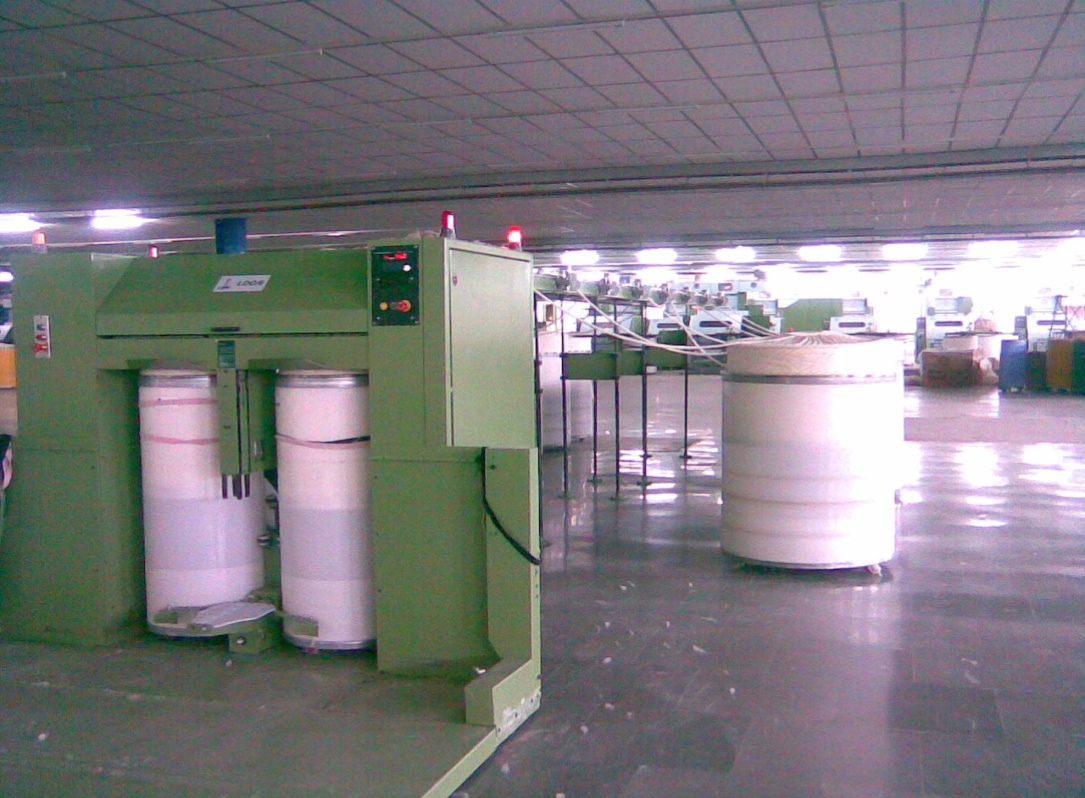
How Drawing Frame Machines Improve Fibre Alignment and Yarn Quality
Two yarns spun from the same bale of cotton can behave very differently on the loom. One runs smoothly and produces a clean, even fabric. The other breaks often and leaves faint streaks. In many cases the difference traces back to how well the fibres were prepared before spinning began, and especially to how the drawing frame machine handled the sliver. The sections below look at what actually changes inside the machine and how those changes reach the finished yarn.
Why Fibre Alignment Matters
A yarn is only as good as the way its fibres are arranged. When fibres lie parallel to the yarn axis, they share the load evenly and grip one another through twist. When they are crossed, bent, or hooked, stress concentrates on a few fibres, and weak points appear. Poor alignment shows up as lower strength, more hairiness, and greater variation in thickness.
Carding opens the tufts into individual fibres and forms a continuous sliver, but the alignment it achieves is only partial. Fibres are still tangled in places, and many carry hooks at their ends. The drawing process is the first stage dedicated to straightening them.
Fibre Hooks and the Carded Sliver
Hooked fibre ends are a normal by-product of carding. Because a hook is a bent portion of a fibre, it effectively shortens that fibre during drafting and can lead to uneven stretching. Mills therefore pay attention to hook direction, since each drawing passage reverses the orientation of the sliver relative to the feed direction. The number of passages is often chosen with this in mind, alongside considerations of blending and levelling.
Doubling and Sliver Uniformity
Alignment is only half the story. The other half is evenness, and doubling is the main tool for it. By feeding several slivers into the machine together, the drawing frame averages out their differences in weight per unit length. A heavy section in one sliver is likely to be matched with lighter sections in the others, so the delivered sliver varies less than any of the inputs did.
Evenness is usually expressed through the coefficient of variation of sliver mass, along with weight checks over fixed lengths. Lower variation at the sliver stage gives the later machines a steadier starting point.
The Fibre Drafting Process in Detail
Drafting is where alignment actually happens. As the sliver passes between roller pairs running at increasing speeds, fibres are drawn forward relative to their neighbours. Fibres held by the faster rollers pull away from those still held by slower ones, and in doing so they slide into a more parallel arrangement.
Several settings influence the result:
• Draft ratio: a higher draft thins the sliver more but increases the risk of irregularity if overdone.
• Roller gauge: the distance between roller nips, normally set according to the fibre length being processed.
• Roller pressure: enough to control the fibres, but not so much that it damages them or wears the coverings.
• Delivery speed: faster production can reduce control over drifting fibres.
When these settings are poorly matched to the fibre, irregular movements called drafting waves can appear and carry through into the yarn. Careful adjustment is how experienced technicians keep them under control.
Studying Drafting Behaviour in the Laboratory
Because the right settings depend heavily on fibre type, length, and fineness, many textile laboratories like to examine drafting behaviour on small samples before applying it to production. Where a laboratory has a small-scale drawing frame machine, technicians can compare how different fibre lengths or blends respond to drafting and then examine the resulting slivers with their usual testing methods. The information gathered helps research teams and mills decide which processing conditions deserve a full-scale trial.
Measuring the Effect on Yarn Quality
Improvements at the drawing stage are verified through testing rather than assumed. Typical checks include sliver weight per unit length, evenness testing, and, further along the line, yarn strength, count variation, hairiness, and imperfection counts. Comparing these results across different drawing conditions shows which changes actually helped.
Testing conditions matter too. Fibre moisture content affects drafting behaviour, so laboratories normally condition samples in a controlled atmosphere, commonly around 20 degrees Celsius and 65 percent relative humidity, before measuring.
Effect on Downstream Processes
A well-aligned, even sliver makes every later stage easier. Roving frames can attenuate it with fewer breaks, and spinning frames see fewer interruptions and steadier yarn count. Where drawn sliver goes straight to the spinning machine, as it does in rotor spinning, the benefit is immediate. Fabric makers notice it too, since more regular yarn reduces streaks and visible barre in knitted and woven goods.
Practical Habits That Protect Quality
Even a well-designed machine can underperform if it is neglected. Worn or glazed top-roller coverings, uneven roller pressure, and fibre buildup on rollers all disturb drafting. Regular cleaning, scheduled inspection of coverings, and routine weight checks help keep performance predictable. Keeping a record of settings for each fibre type also saves time when the same material returns.
Conclusion
The effect of a drawing frame is easy to underestimate because its work is invisible in the finished yarn. Yet straighter fibres and a more even sliver are exactly what allow later stages to run well. For anyone responsible for yarn quality, a close look at drafting and doubling is one of the most rewarding places to begin.