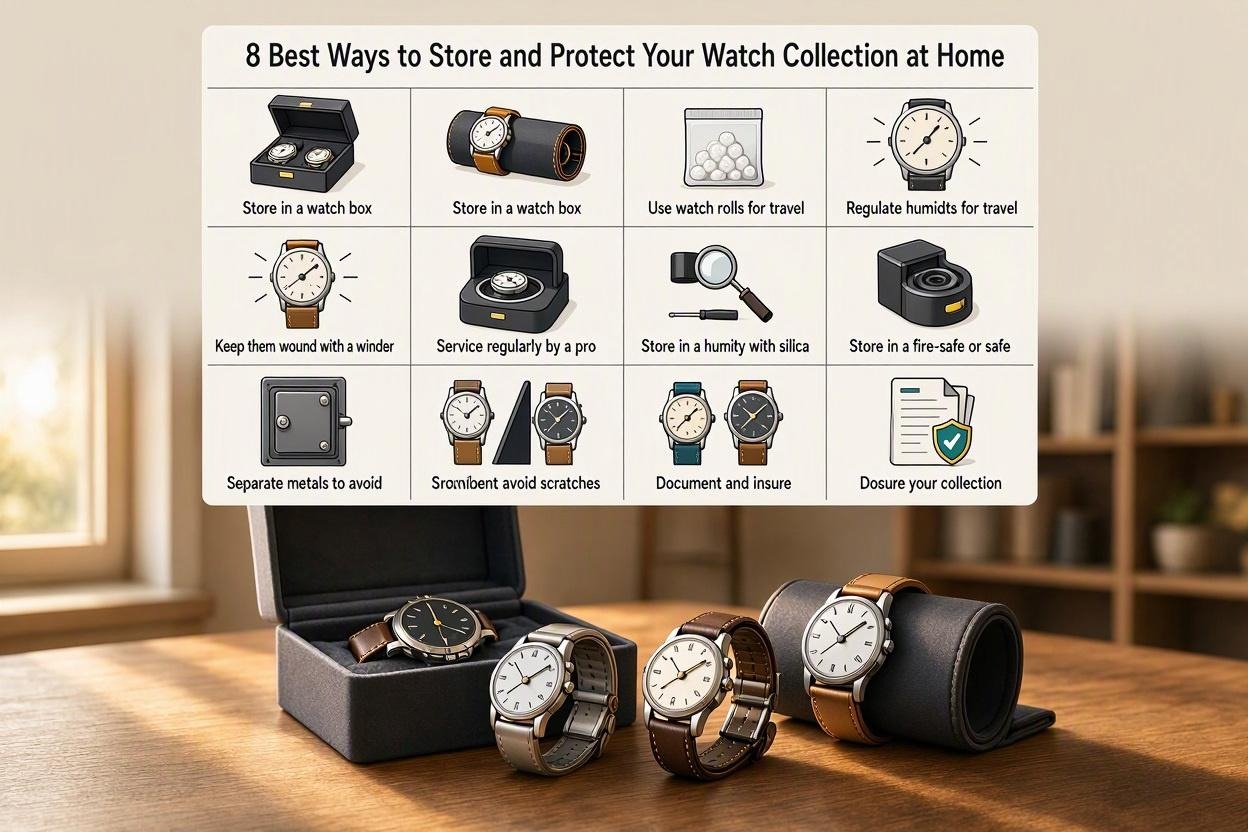
8 Best Ways to Store and Protect Your Watch Collection at Home
If you own more than one watch, you already know the real challenge isn’t buying them. It’s looking after them. A watch left in a drawer picks up dust, scratches, and moisture damage. An automatic watch left unworn just stops. And a collection that keeps growing needs a storage plan that actually keeps up with it.
This guide walks through the best ways to store your watches at home, whether you own a single dress watch or a growing collection of automatics. Each method below solves a specific problem, so you can pick what fits your collection instead of guessing.
1. Start With a Dedicated Watch Box
A proper watch box is the foundation of good storage. It keeps watches separated so they don’t scratch each other, shields them from dust, and protects them from direct sunlight, which fades dials and straps over time.
Wood is the most popular choice for a reason. It’s sturdy, it looks good on a dresser or shelf, and most wooden boxes come lined with soft materials like velvet or suede that won’t scuff your cases. If you’re not sure what to look for, a guide to wooden watch boxes covers the different sizes, finishes, and cushion setups so you can match a box to your collection instead of buying the first one you see.
2. Separate Automatics From Quartz Watches
Not every watch has the same storage needs. Quartz watches run on a battery and don’t need any special treatment beyond a clean, dry spot. Automatic and mechanical watches are different. They rely on the natural motion of your wrist to stay wound, so once they sit still, they stop and need to be reset.
If your collection is a mix of both, it helps to store them separately. Keep quartz pieces in a simple box or drawer, and give your automatics a section that supports their specific needs, which brings us to the next point.
3. Use a Watch Winder for Automatics You Don’t Wear Often
Do you need a watch winder? If you own an automatic watch with a complicated setup, like a perpetual calendar, or one you only wear occasionally, the answer is yes. A watch winder keeps the movement running by gently rotating the watch when it’s not on your wrist, so you never have to reset the time and date every time you pick it up.
Not all winders are equal, though. The motor quality, rotation settings, and direction control (clockwise, counterclockwise, or both) all affect how well a winder actually works for your specific watch. This breakdown of a quality top 7 best watch range of winders is a useful starting point if you’re deciding between models, since it compares features side by side instead of just listing prices.
4. Control Humidity in Your Storage Space
Moisture is one of the biggest threats to a watch’s longevity. Too much humidity can fog up the crystal, corrode internal components, and cause leather straps to crack or grow mold. This matters even more if you live somewhere with humid summers or store your watches in a bathroom or basement.
A few small silica gel packets inside your watch box absorb excess moisture without any effort on your part. If you’re storing higher-value pieces, a small dehumidifier box or a display case with a built-in humidity gauge gives you more precise control.
5. Keep Watches Out of Direct Sunlight
Sunlight fades dial colors, discolors leather straps, and can even warp certain watch materials over time. This is an easy one to overlook because a watch on a shelf or in a display cabinet often looks great catching the light, but that same light is slowly working against it.
Position your watch box or display case away from windows, or choose one with UV-resistant glass if you like the look of an open display. Rotating watches out of direct light exposure every few weeks also helps if full shade isn’t an option in your space.
6. Clean and Inspect Your Watches Regularly
A quick wipe-down with a soft, lint-free cloth removes fingerprints, dust, and skin oils before they build up. Do this every time you take a watch off, not just occasionally. It takes seconds and prevents grime from settling into the case seams or bracelet links.
While you’re at it, check the strap or bracelet for wear, look at the crystal for scratches, and make sure the crown screws down properly if your watch has one. Catching small issues early is far cheaper than fixing a problem that’s had months to get worse.
7. Insure and Document Higher-Value Pieces
If your collection includes watches worth a significant amount, standard home insurance often won’t cover them adequately, or at all, in the event of theft, loss, or damage. A specialist watch insurance policy is worth looking into once your collection reaches a certain value.
Alongside insurance, keep a simple record of each watch: the model, serial number, purchase date, and a few photos. This makes claims easier if something ever goes wrong, and it’s useful if you ever decide to sell.
8. Build Your Collection From a Trusted Source
Good storage habits only matter if you’re buying pieces worth protecting in the first place. Working with a retailer that stands behind what it sells makes ownership easier down the line, whether that means genuine parts, honest guidance, or reliable service. Browsing the Aevitas online store gives you an idea of what a well-curated selection of watches and accessories looks like, from the timepieces themselves to the boxes and winders that keep them running well.
For readers who want a deeper technical look at how mechanical movements actually work, the Horological Society of New York publishes free educational resources on watchmaking that are worth a read if you’re curious about the mechanics behind your collection.
Final Thoughts
Storing a watch collection well doesn’t need to be complicated. A solid box, the right winder for your automatics, and a bit of regular care go a long way toward keeping every piece looking and running the way it should. Start with the basics, then build up your setup as your collection grows.
FAQs
Do quartz watches need a watch winder?
No. Quartz watches run on a battery and keep time on their own. Winders are only useful for automatic and mechanical watches that rely on wrist movement to stay wound.
How many watches can fit in a standard wooden watch box?
Most wooden watch boxes hold anywhere from 6 to 12 watches, depending on the size and cushion layout. Larger collector cases can hold 20 or more.
Is it bad to leave an automatic watch unworn without a winder?
It’s not harmful, just inconvenient. The watch will simply stop running and need to be reset when you wear it again. A winder is a convenience, not a necessity.
How often should I clean my watches?
A quick wipe after each wear is ideal. A deeper clean, including the strap or bracelet, is worth doing every few weeks depending on how often you wear the piece.
What’s the biggest storage mistake watch owners make?
Leaving watches in direct sunlight or a humid environment. Both cause gradual, often irreversible damage to dials, straps, and internal components.