Common Applications of 100G QSFP28 LR4 Optical Modules
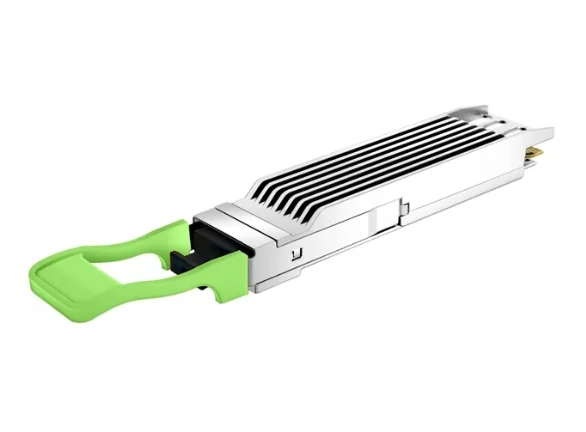
As modern networks continue to evolve toward higher bandwidth and lower latency, 100G connectivity has become a critical requirement for data centers, enterprise backbones, cloud computing platforms, and telecommunications infrastructure. Among the many 100G optical solutions available today, 100G QSFP28 LR4 optical modules are widely adopted for their ability to support long-distance transmission over single-mode fiber while maintaining high reliability and efficient power consumption. Designed for 100G Ethernet applications, these modules provide an ideal balance between transmission distance, deployment flexibility, and network scalability.
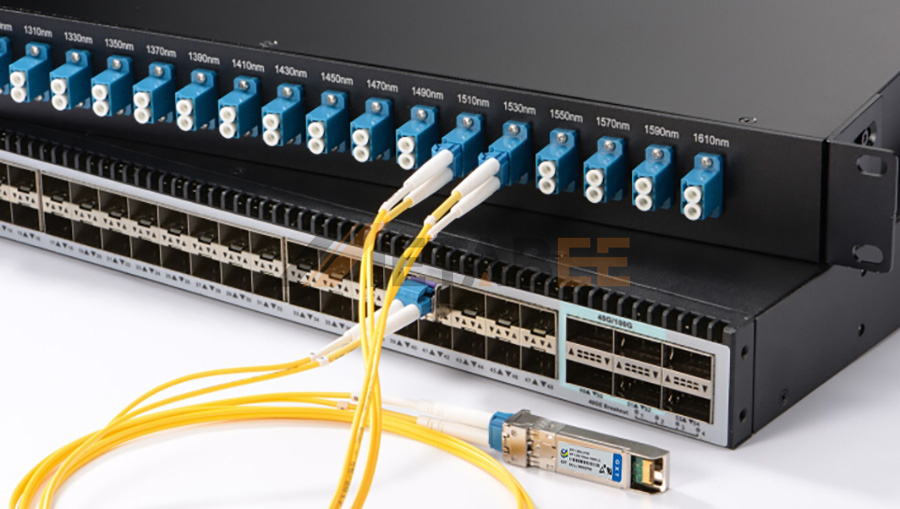
The 100G QSFP28 LR4 optical module typically operates over duplex single-mode fiber using LC connectors and supports transmission distances of up to 10 kilometers. By utilizing four LAN-WDM wavelengths around 1310nm, the module can transmit four 25Gbps channels simultaneously, enabling a total data rate of 100Gbps. In addition, many 100G QSFP28 LR4 modules support DDM functionality, allowing network administrators to monitor parameters such as temperature, voltage, optical power, and laser bias current in real time, improving network visibility and maintenance efficiency.
Because of these advantages, 100GBASE-LR4 QSFP28 transceivers have become a popular choice for a wide range of 100G networking environments. From hyperscale data centers to metropolitan area networks, these modules play a key role in supporting high-speed optical interconnections and future-ready network architectures.
Data Center Interconnect (DCI)
One of the most common applications of 100G QSFP28 LR4 optical modules is Data Center Interconnect (DCI). As enterprises and cloud service providers increasingly deploy multiple data centers across different campuses or geographic locations, the need for reliable high-bandwidth connections between facilities has grown significantly. Since the LR4 module supports transmission distances up to 10km over single-mode fiber, it is well suited for interconnecting data centers located within metropolitan areas or large enterprise campuses.
In DCI environments, 100G QSFP28 LR4 modules help organizations transfer large volumes of data efficiently between storage systems, servers, and cloud resources. The high bandwidth capability enables fast synchronization, backup, disaster recovery, and workload migration between facilities. Compared with shorter-reach solutions such as SR4 modules, LR4 transceivers eliminate the distance limitations associated with multimode fiber while reducing the complexity of deploying parallel fiber cabling systems.
Another advantage in DCI deployments is the use of duplex LC single-mode fiber infrastructure. Many existing enterprise and carrier networks are already built on single-mode fiber, allowing network operators to upgrade to 100G speeds without major cabling changes. This significantly lowers deployment costs and simplifies network expansion.
Cloud Computing Networks
Cloud computing environments require massive bandwidth to support virtualization, distributed storage, AI workloads, and high-density server clusters. As cloud traffic continues to grow, network operators must deploy scalable optical interconnect solutions capable of handling continuous data transmission with minimal latency. 100G QSFP28 LR4 optical modules are widely used in cloud computing networks because they provide stable long-distance 100G connectivity between switches, routers, and aggregation layers.
In hyperscale data centers, these modules are often deployed in spine-leaf architectures where high-speed interconnections between network layers are essential for maintaining low latency and high throughput. The 10km transmission capability also allows operators to connect multiple data halls or distributed cloud facilities using a unified 100G infrastructure.
Furthermore, the compact QSFP28 form factor enables high port density on switches and routers, helping cloud providers maximize rack space while minimizing power consumption. Compared with older CFP or CFP2 modules, QSFP28 LR4 modules offer lower power usage and higher scalability, making them more suitable for modern cloud network environments.
Enterprise Backbone Networks
Large enterprises often require high-speed backbone networks to support internal communication, video conferencing, centralized storage, and business-critical applications. As enterprise data traffic continues to increase, traditional 10G and 40G networks may no longer provide sufficient bandwidth for growing operational demands. In these situations, 100G QSFP28 LR4 optical modules provide an efficient upgrade path for enterprise backbone infrastructure.
Because enterprise campuses may span multiple buildings or remote office locations, the 10km transmission distance of LR4 modules offers excellent flexibility for long-range interconnections. Enterprises can deploy these modules to connect core switches, aggregation switches, and data centers across campuses without requiring signal regeneration equipment.
In addition, the high reliability and DDM monitoring capabilities of LR4 transceivers help enterprise IT teams improve network maintenance and troubleshooting. Real-time diagnostic information allows administrators to detect potential optical issues before they impact network performance, reducing downtime and improving operational efficiency.
Telecommunications and ISP Networks
Telecommunications operators and Internet Service Providers (ISPs) are continuously upgrading their networks to accommodate growing internet traffic, video streaming, 5G services, and cloud applications. 100G QSFP28 LR4 optical modules are frequently used in telecom and carrier networks because they provide cost-effective high-speed optical transmission over relatively long distances.
In metro networks, these modules can connect routers, switches, and transport equipment within urban or regional infrastructures. The ability to transmit 100Gbps data over 10km single-mode fiber makes LR4 modules suitable for aggregation and access layer deployments where stable long-distance connectivity is required.
Telecom providers also value the interoperability and standardization of QSFP28 LR4 modules. Since these transceivers comply with IEEE 100GBASE-LR4 standards, they can be integrated into equipment from multiple vendors, simplifying network deployment and reducing compatibility concerns. Their compact size and lower power consumption additionally help carriers improve network efficiency while reducing operating costs.
Campus and Metropolitan Area Networks
Educational institutions, healthcare systems, research organizations, and government facilities often operate large campus or metropolitan area networks that require high-bandwidth communication between buildings and departments. 100G QSFP28 LR4 optical modules are commonly used in these environments to support bandwidth-intensive applications such as video surveillance, scientific research, remote collaboration, and centralized data storage.
For universities and research institutions in particular, large volumes of data are frequently exchanged between laboratories, computing centers, and storage facilities. LR4 modules provide the high-speed optical connectivity necessary to support these demanding workloads while maintaining stable long-distance communication.
Additionally, because these networks often expand over time, the scalability of QSFP28 technology makes future upgrades easier. Organizations can gradually migrate from lower-speed networks to 100G infrastructure without completely replacing their existing single-mode fiber cabling systems.
Conclusion
As network traffic continues to increase across nearly every industry, the demand for reliable and scalable 100G optical connectivity is growing rapidly. 100G QSFP28 LR4 optical modules have become an important solution for long-distance 100G Ethernet transmission thanks to their 10km reach, duplex LC single-mode fiber interface, compact QSFP28 form factor, and efficient power consumption.
From data center interconnects and cloud computing environments to enterprise backbones, telecom networks, and metropolitan infrastructures, these modules support a wide variety of high-bandwidth applications. Their ability to deliver stable long-range performance while leveraging existing single-mode fiber infrastructure makes them a practical and cost-effective choice for organizations planning to build future-ready 100G networks.
Stay in touch to get more updates & news on The Techsslaash!